
Agentic AI Devices: A New Kind of Intelligence
As AI evolves from a tool that responds to prompts into an intelligence that can proactively assist and act, Lenovo saw an opportunity to rethink the role of personal devices. Together, we reimagined the Lenovo Agent Ecosystem as a new cognitive architecture centered on a private, multimodal AI model that lives on device, continuously learns from real-time context, and adapts to each individual over time.
As AI evolves from a tool that responds to prompts into an intelligence that can proactively assist and act, Lenovo saw an opportunity to rethink the role of personal devices. Together, we reimagined the Lenovo Agent Ecosystem as a new cognitive architecture centered on a private, multimodal AI model that lives on device, continuously learns from real-time context, and adapts to each individual over time.
ROLE
ROLE
Interaction Designer
Interaction Designer
CONTRIBUTIONS
CONTRIBUTIONS
Led interaction design for Neuropod. Led storytelling visuals of all devices. Created visual exploration concepts for research assets.
Led interaction design for Neuropod. Led storytelling visuals of all devices. Created visual exploration concepts for research assets.
PROJECT TYPE & YEAR
PROJECT TYPE & YEAR
Agentic AI, 2025
Agentic AI, 2025
Imagine a future where agentic AI is a natural part of your daily life; not screens or assistants, but every day objects worn, carried or sensed.
Imagine a future where agentic AI is a natural part of your daily life; not screens or assistants, but every day objects worn, carried or sensed.
Thanks to advances in AI and large language models, there is a paradigm shift happening in computing. And while it is clear these new capabilities have profound impact on interactions, form factors and use cases, we haven’t yet seen how devices designed native to these new capabilities would look, work and feel like.
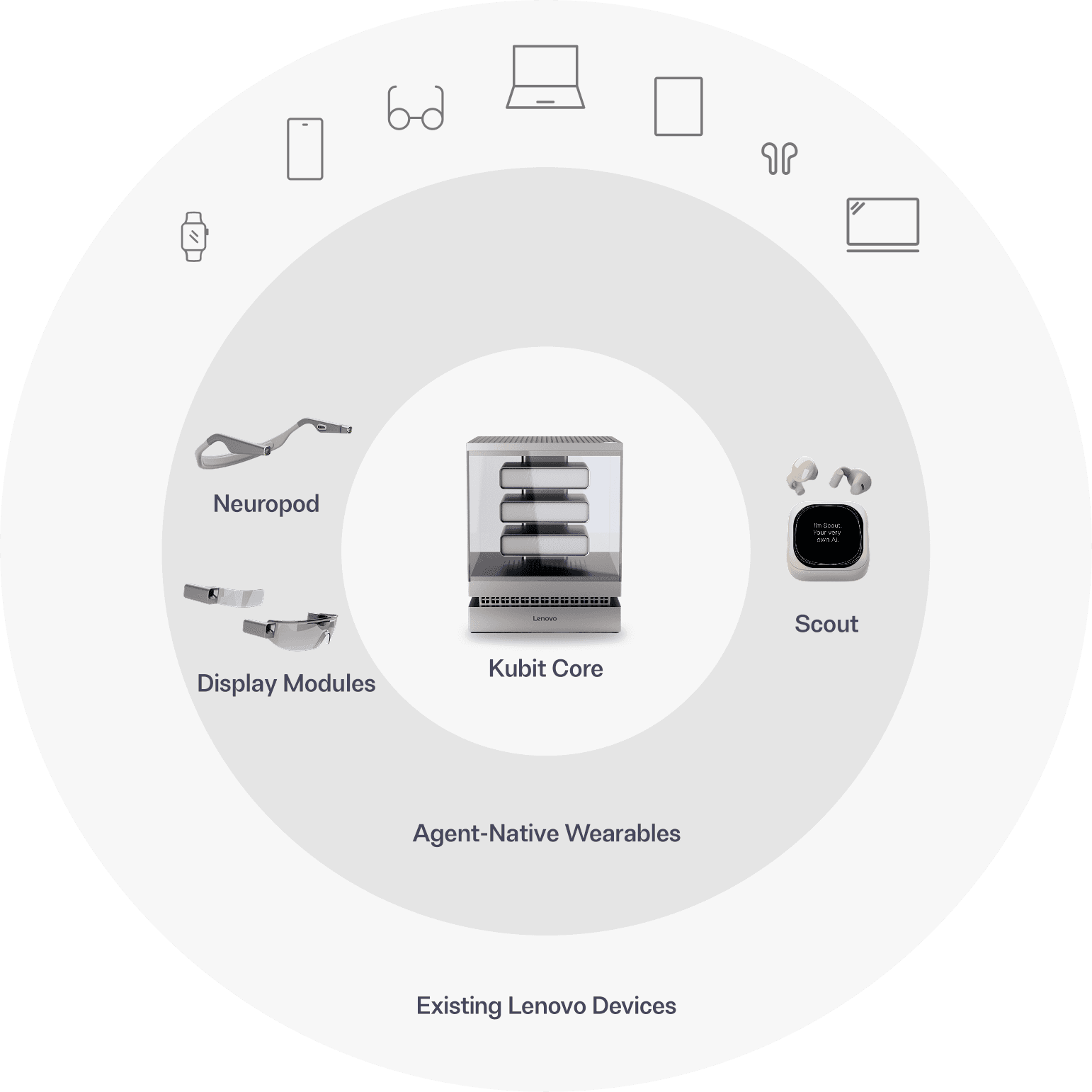
Rather than existing as isolated products, the Lenovo ecosystem connects a family of agent-native devices through shared intelligence, enabling seamless experiences that are more personal, proactive, and deeply aligned with each person's needs while keeping privacy, trust, and local ownership at the core.
Thanks to advances in AI and large language models, there is a paradigm shift happening in computing. And while it is clear these new capabilities have profound impact on interactions, form factors and use cases, we haven’t yet seen how devices designed native to these new capabilities would look, work and feel like.
Rather than existing as isolated products, the Lenovo ecosystem connects a family of agent-native devices through shared intelligence, enabling seamless experiences that are more personal, proactive, and deeply aligned with each person's needs while keeping privacy, trust, and local ownership at the core.
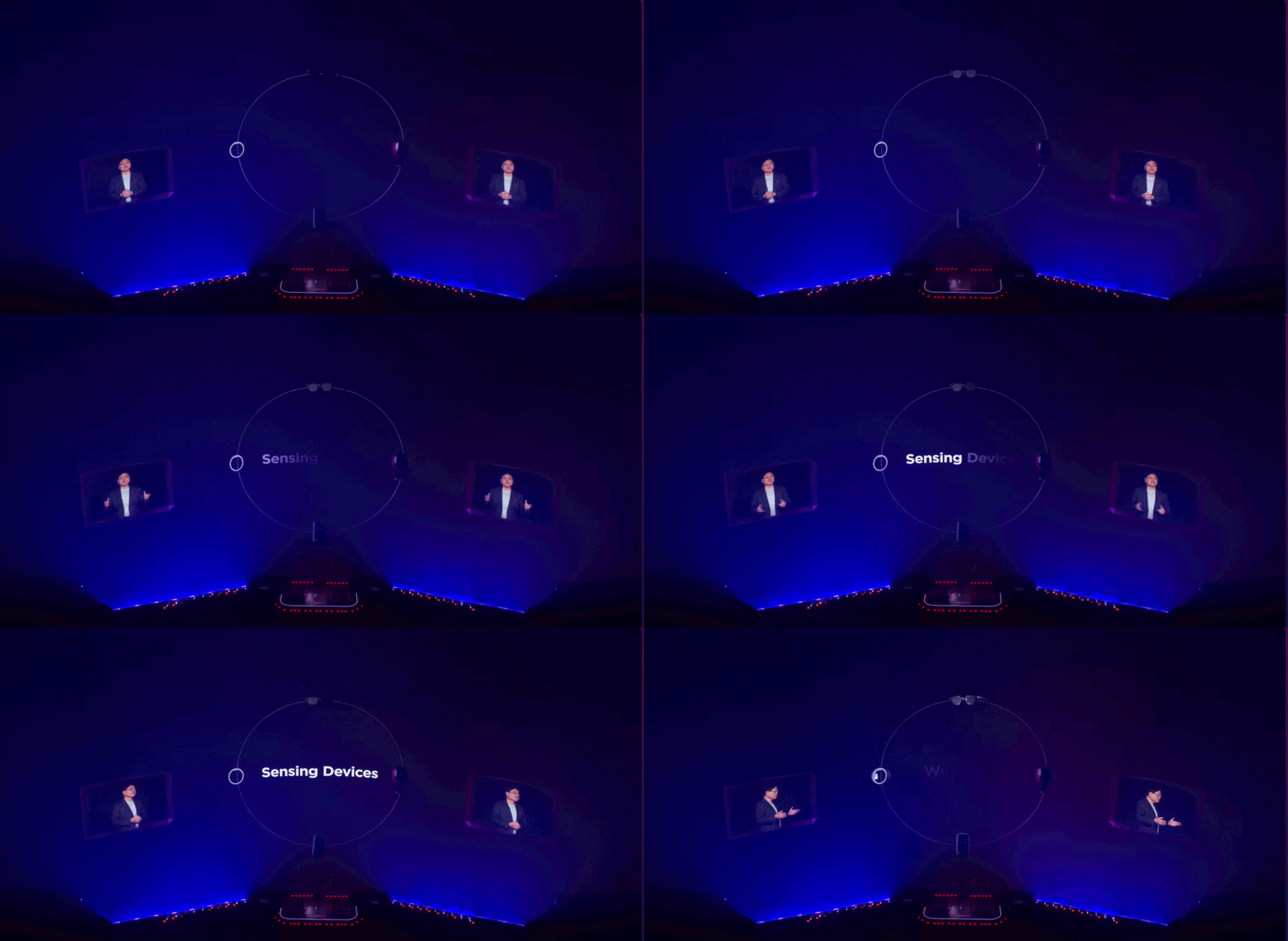
This agentic ecosystem was presented at CES 2026 in front of an audience of 148,392 attendees.
This agentic ecosystem was presented at CES 2026 in front of an audience of 148,392 attendees.
Our work directly informed the Lenovo x FIFA partnership that has Lenovo to provide FIFA technology – from AI (Artificial Intelligence) innovation to devices and data center infrastructure – to enhance fan experiences and global broadcasts.
Our work directly informed the Lenovo x FIFA partnership that has Lenovo to provide FIFA technology – from AI (Artificial Intelligence) innovation to devices and data center infrastructure – to enhance fan experiences and global broadcasts.
Before imagining the future of agentic devices, we started by listening.
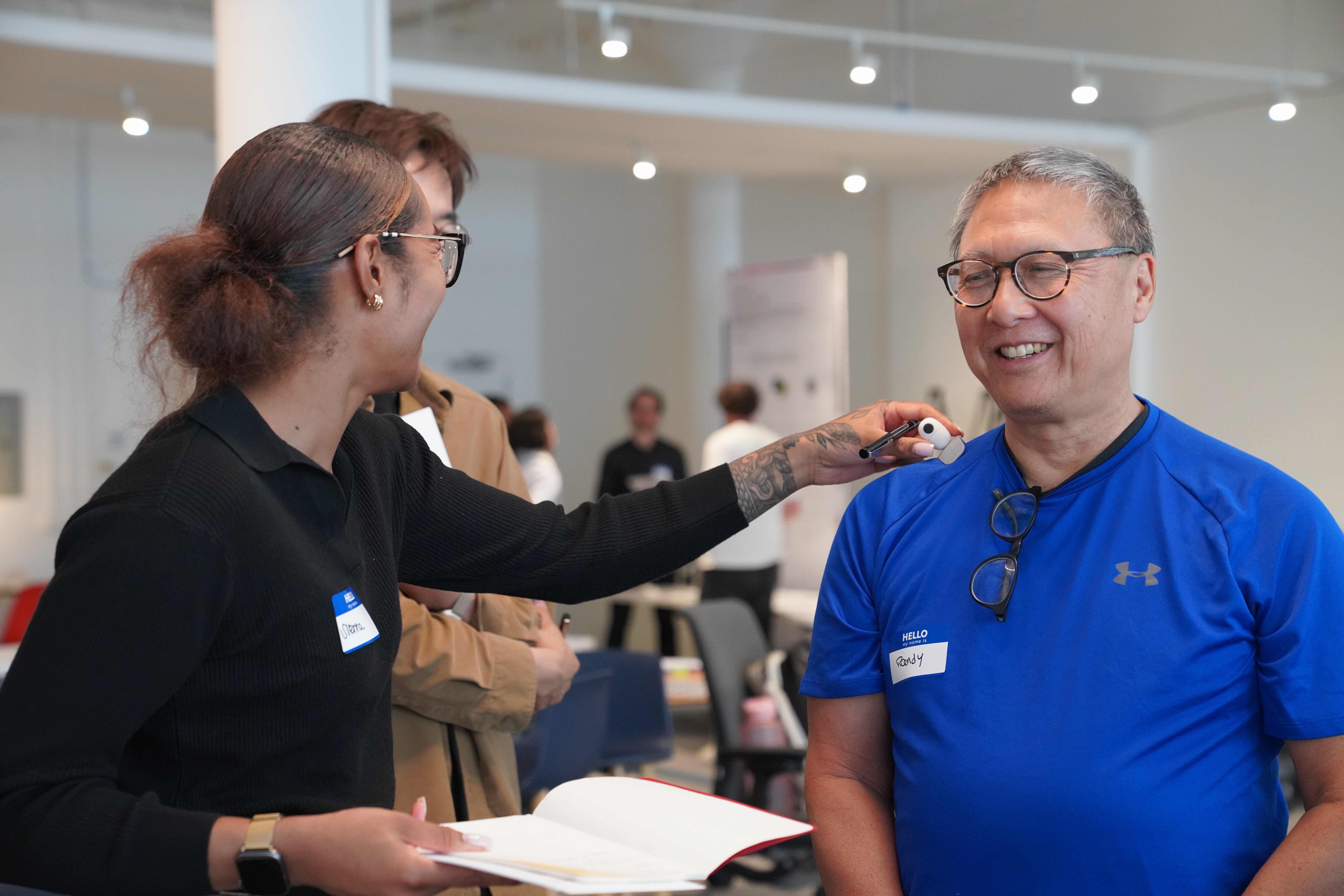
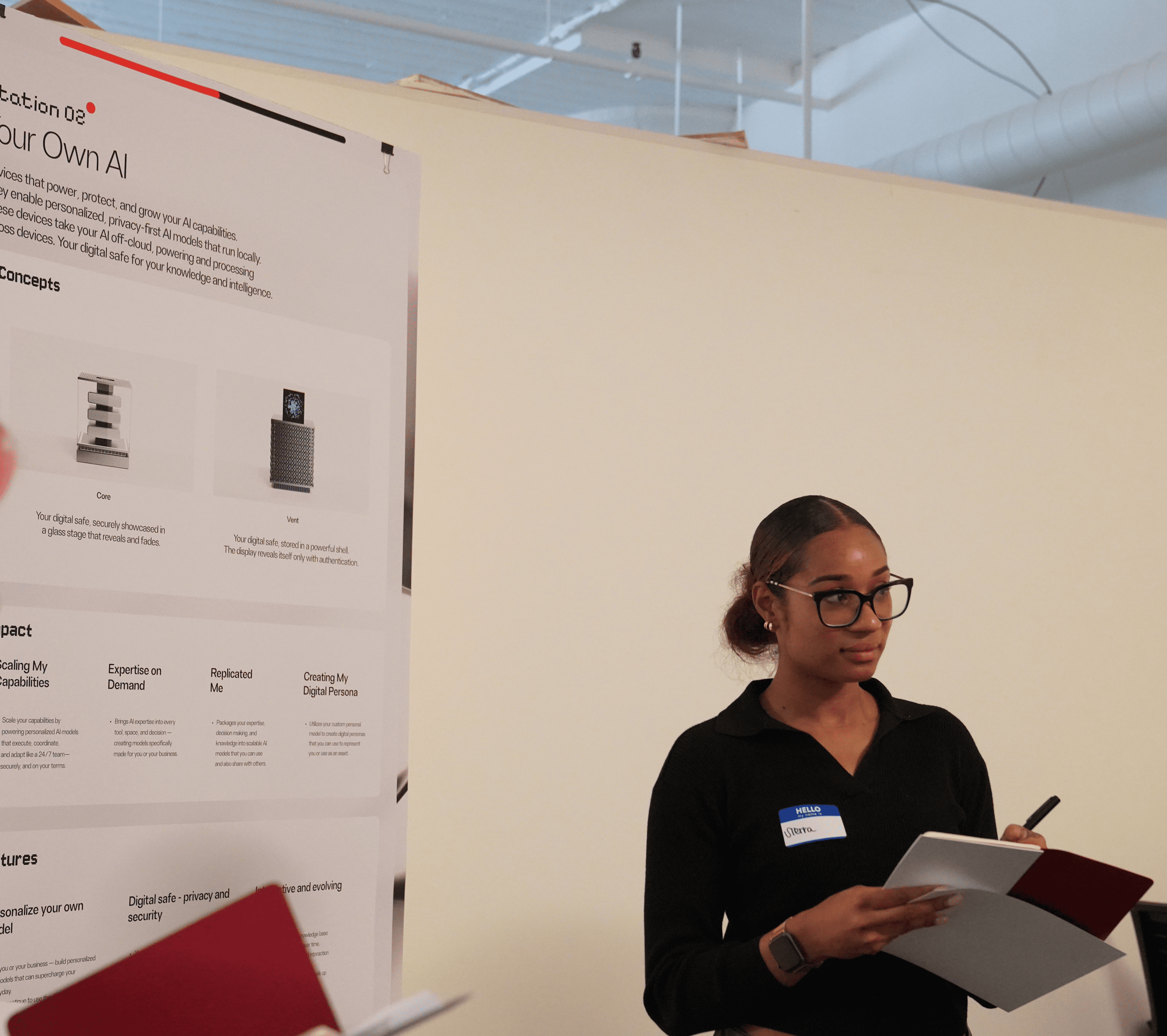
Before imagining the future of agentic devices, we started by listening.
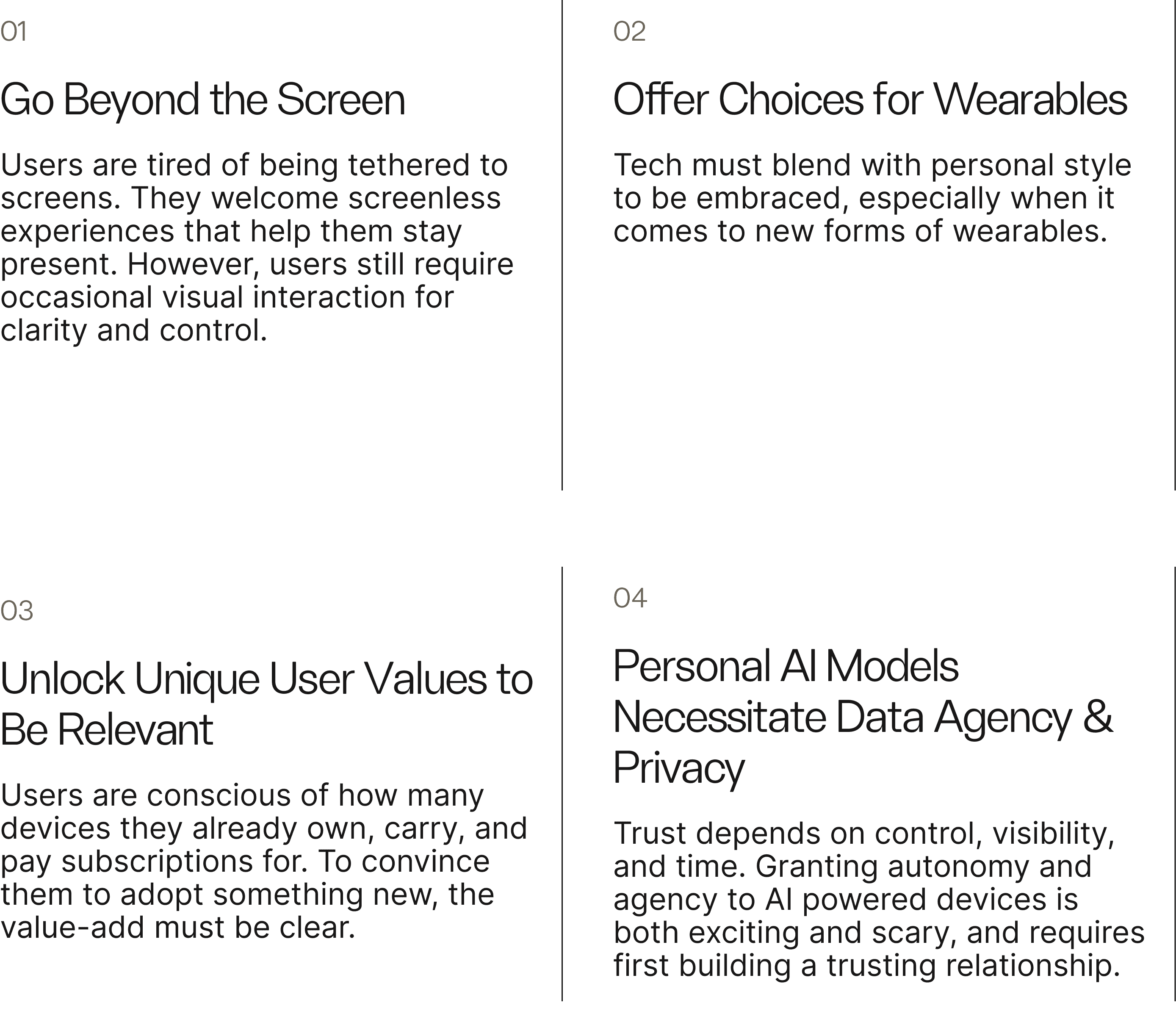
We spoke with people across different ages, lifestyles, and levels of familiarity with emerging technology to understand how AI could become a trusted part of everyday life. Through interviews and concept testing, we uncovered opportunities around reducing screen dependence, respecting personal style, creating meaningful value beyond existing devices, and building trust through transparency and user control.
USER DEMOGRAPHIC
8 participants (age 20-66) across diverse backgrounds — all interested in AI and early adopters of new technology.
USER DEMOGRAPHIC
8 participants (age 20-66) across diverse backgrounds — all interested in AI and early adopters of new technology.
RESEARCH METHODS
Pre-screener survey
Pre-screener interview
Session Interview
Concept Prototype Feedback
Group Discussion
Shopping / Voting Activity
RESEARCH METHODS
Pre-screener survey
Pre-screener interview
Session Interview
Concept Prototype Feedback
Group Discussion
Shopping / Voting Activity

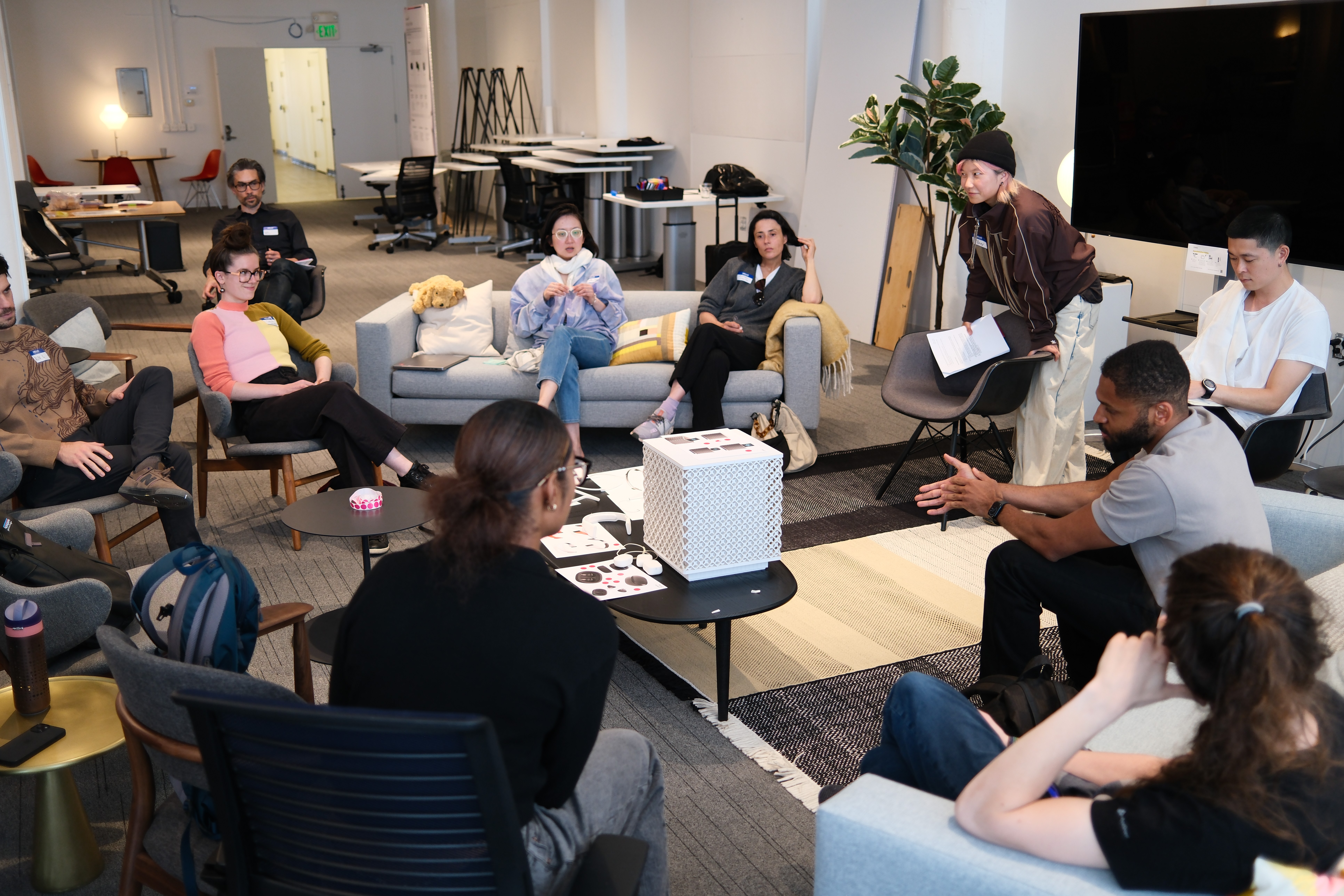
Insights from user research that guided our designs
Insights from user research that guided our designs
I used generative AI to bring future concepts to life in a way that prototypes alone could not.
I used generative AI to bring future concepts to life in a way that prototypes alone could not.
In addition to designing the prototype interfaces, we used generative AI to create realistic visuals and scenarios that helped stakeholders envision how agentic AI could seamlessly fit into everyday life. These narratives made abstract concepts tangible and sparked richer conversations about the future of Lenovo's ecosystem.
In addition to designing the prototype interfaces, we used generative AI to create realistic visuals and scenarios that helped stakeholders envision how agentic AI could seamlessly fit into everyday life. These narratives made abstract concepts tangible and sparked richer conversations about the future of Lenovo's ecosystem.
Neuropod is the “real-time” translator of the physical world.
Neuropod is the “real-time” translator of the physical world.
Neuropod is the "real-time" translator of the physical world.
With bio-sensing abilities to create a new dimension of personalization, adapting not just to how you think and act, but how you feel. With Neuropod, your surroundings become a rich set of intelligence.
With bio-sensing abilities to create a new dimension of personalization, adapting not just to how you think and act, but how you feel. With Neuropod, your surroundings become a rich set of intelligence.

Our research showed that people want technology to step back rather than compete for their attention. Instead of introducing another interface to learn, we designed Neuropod to fit naturally into existing behaviors through subtle touch, voice, gestures, and passive sensing. This allows the device to provide support in the background, keeping people present in the moment while offering visual feedback only when greater clarity or control is needed.


We introduced Emma as a way to tell a human story.
We introduced Emma as a way to tell a human story.
To make the concept feel relatable, we anchored Neuropod around Emma, a fictional persona navigating everyday life. Following her journey helped stakeholders see how the device could seamlessly support real moments, shifting the conversation from features to meaningful experiences.
To make the concept feel relatable, we anchored Neuropod around Emma, a fictional persona navigating everyday life. Following her journey helped stakeholders see how the device could seamlessly support real moments, shifting the conversation from features to meaningful experiences.

Scroll right: i led the ui design & created the storytelling visuals of this device
i led the ui design & created the storytelling visuals of this device.
i led the ui design & created the storytelling visuals of this device

Signature Interactions
Signature Interactions
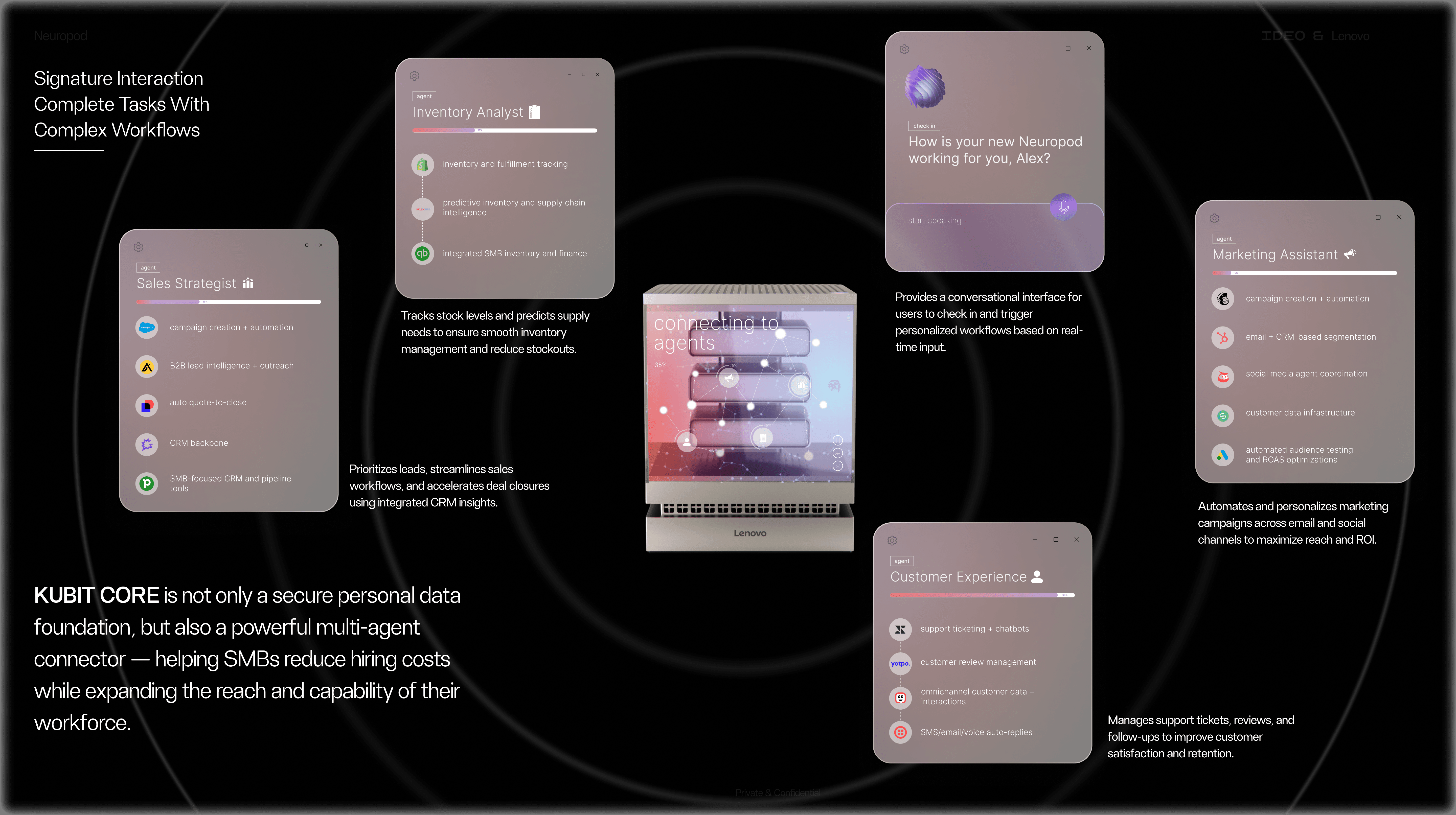
Neuropod is designed to act as an intelligence layer across the user's digital ecosystem. Rather than searching a single source, it continuously brings together personal context, connected services, and real-time information to provide recommendations that are more relevant, trustworthy, and actionable.
Neuropod is designed to act as an intelligence layer across the user's digital ecosystem. Rather than searching a single source, it continuously brings together personal context, connected services, and real-time information to provide recommendations that are more relevant, trustworthy, and actionable.

Signature Interaction | Visual Exploration and Real-time Q&A

Signature Interaction | Interactive Guidance through Complex Tasks

Signature Interaction | Agentic Assistance Anywhere
The Impact
Our work helped shape Lenovo’s vision for agentic AI.
Our work helped shape Lenovo’s vision for agentic AI.
The concepts we developed helped shape Lenovo’s vision for the next generation of AI experiences, culminating in the public debut of Kubit and a portfolio of agentic AI concepts at Lenovo Tech World during CES 2026.
The concepts we developed helped shape Lenovo’s vision for the next generation of AI experiences, culminating in the public debut of Kubit and a portfolio of agentic AI concepts at Lenovo Tech World during CES 2026.


Toolkit
Figma, Google Flow AI, Midjourney, Elevenlabs, Premiere Pro, Photoshop
FOCUS AREAS
Interaction design, storytelling, user research, user synthesis, stakeholder collaboration
TEAM
Core team: 3 interaction designers, 3 industrial engineers, 1 guide
TOOLKIT
Figma, Google Flow AI, Midjourney, Elevenlabs, Premiere Pro, Photoshop
FOCUS AREAS
Interaction design, storytelling, user research, user synthesis, stakeholder collaboration
TEAM
Core team: 3 interaction designers, 3 industrial engineers, 1 guide